Sensor & Controller Integration
Sensor, actuator and controller integration, including ESP32 / STM32 microcontrollers and GPIO, ADC, CAN, UART or I2C interfaces where appropriate.
INDUSTRIAL IoT & EDGE ENGINEERING
Connecting physical equipment, sensors and controllers with software, data and control platforms.
Saturn Axis Systems is a specialist engineering company working across enterprise integration and industrial systems. We support your team with sensor and controller integration, embedded and edge systems, automation software and data, or take responsibility for a defined engineering workstream.
OUR ENGINEERING CAPABILITIES
A defined scope can cover one layer or the interfaces between several, from sensor and controller connectivity to control logic, software and data. We work alongside your equipment, controls and software engineers, with responsibilities agreed for each project.
Sensor, actuator and controller integration, including ESP32 / STM32 microcontrollers and GPIO, ADC, CAN, UART or I2C interfaces where appropriate.
Local processing and control, gateway logic and upstream communication, with local operation designed around the equipment requirements.
MQTT telemetry, REST APIs and external service integration, with message handling and reliable data exchange.
Measurement collection, databases and historical storage, including PostgreSQL / TimescaleDB where appropriate.
Dashboards, equipment state, environmental measurements, alerts and remote visibility.
Control logic, rules, schedules and thresholds for equipment automation, including pumps, relays and actuator control where appropriate.
Connect existing controllers and legacy equipment to a modern telemetry and software layer without unnecessary full replacement.
Link operational and edge systems with ERP, MES, cloud platforms, APIs and external business software.
ACROSS SYSTEM BOUNDARIES
Telemetry moves towards the data and monitoring layers; agreed commands and automation rules connect back to the equipment. The diagram shows functional layers, not a fixed product or mandatory deployment topology.
HANDS-ON ENGINEERING EXPERIENCE
Controlled Environment Agriculture (CEA) is one application of our Industrial IoT and edge capability. Our hands-on engineering experience includes the design and implementation of a working end-to-end greenhouse automation system combining sensing, control, telemetry and monitoring.
End-to-end implementation: physical devices, control logic and software/data infrastructure.
Illustrative engineering views of the system architecture and operator layer.
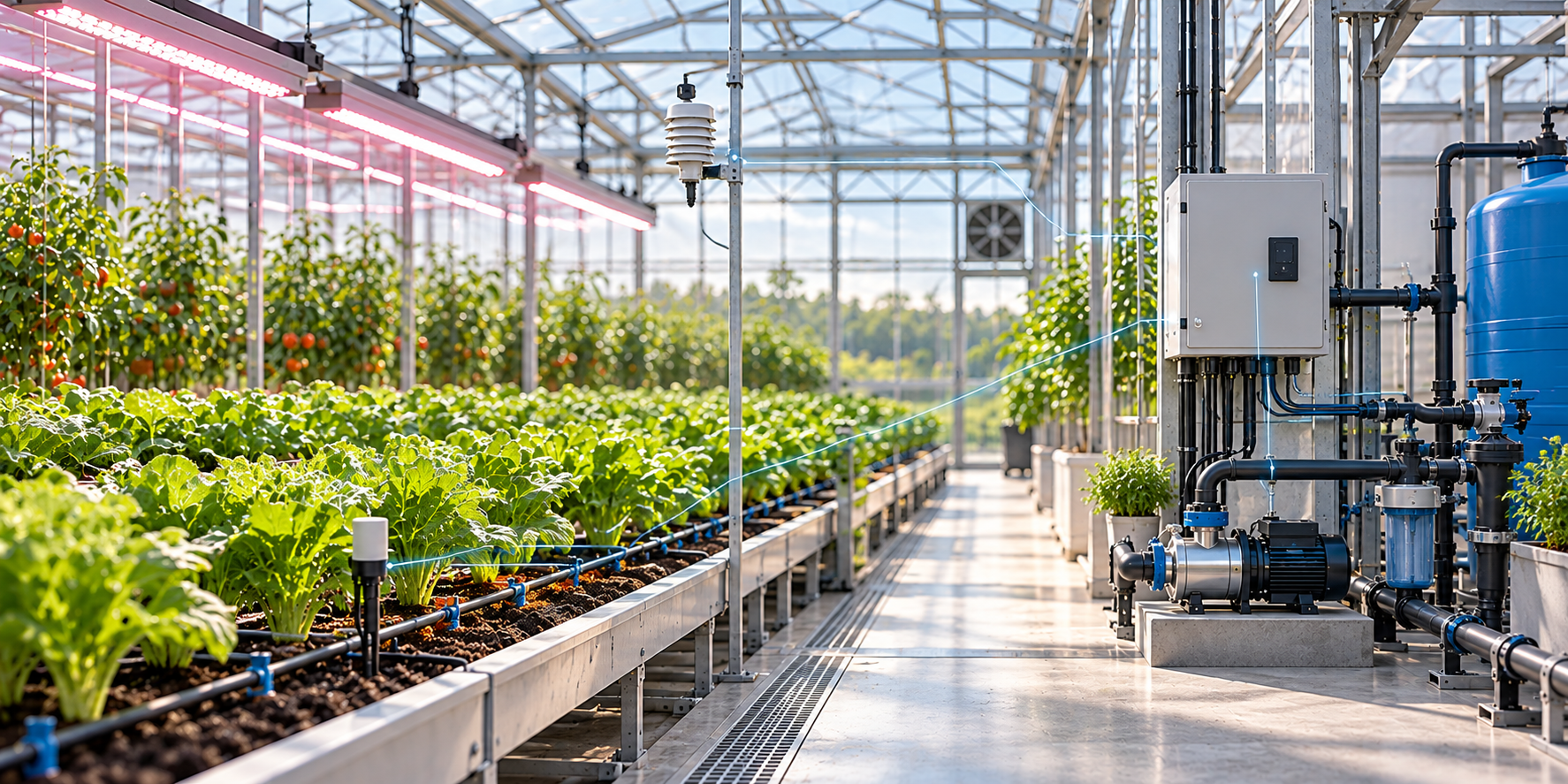
A connected growing environment combining environmental and soil sensing, irrigation, lighting and local control as one automation system.
View full-size image (opens in a new tab)Bring environmental measurements and control of growing conditions into one manageable system: soil moisture, temperature, air humidity, irrigation and lighting.
Environmental and soil sensors, ESP32-based control units, irrigation pumps and lighting were connected through custom control logic, local device communication and networking. MQTT telemetry fed PostgreSQL / TimescaleDB historical storage, with Grafana monitoring and logging.
ESP32 · MQTT · PostgreSQL / TimescaleDB · Grafana · Sensors and actuators · Networking · Custom control logic
A working system spanning sensing, embedded control, telemetry, historical storage and remote monitoring.
View the Engineering Experience Record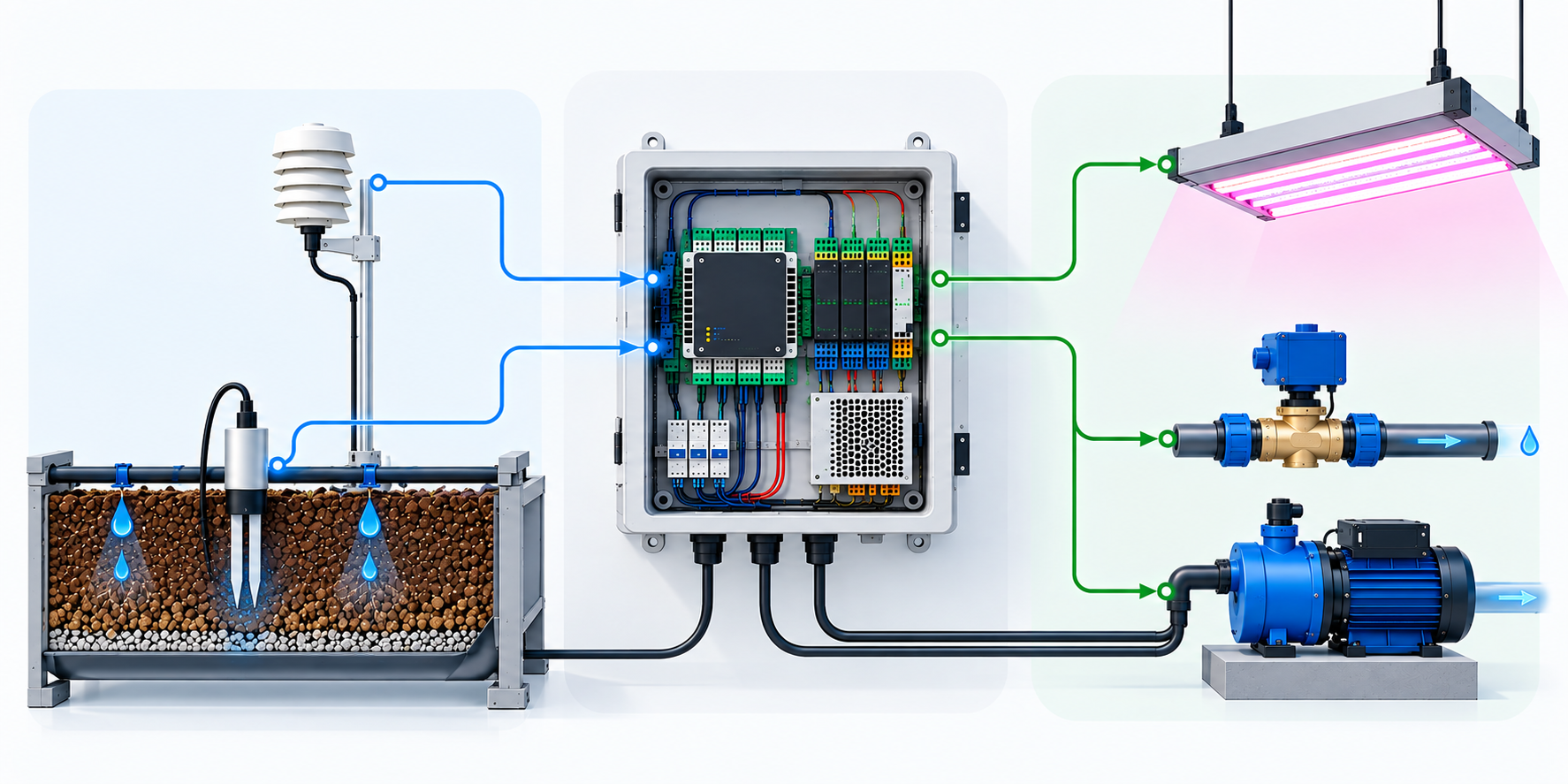
Environmental and soil measurements feed local control logic that operates irrigation, pumps, valves, lighting and other connected equipment.
View full-size image (opens in a new tab)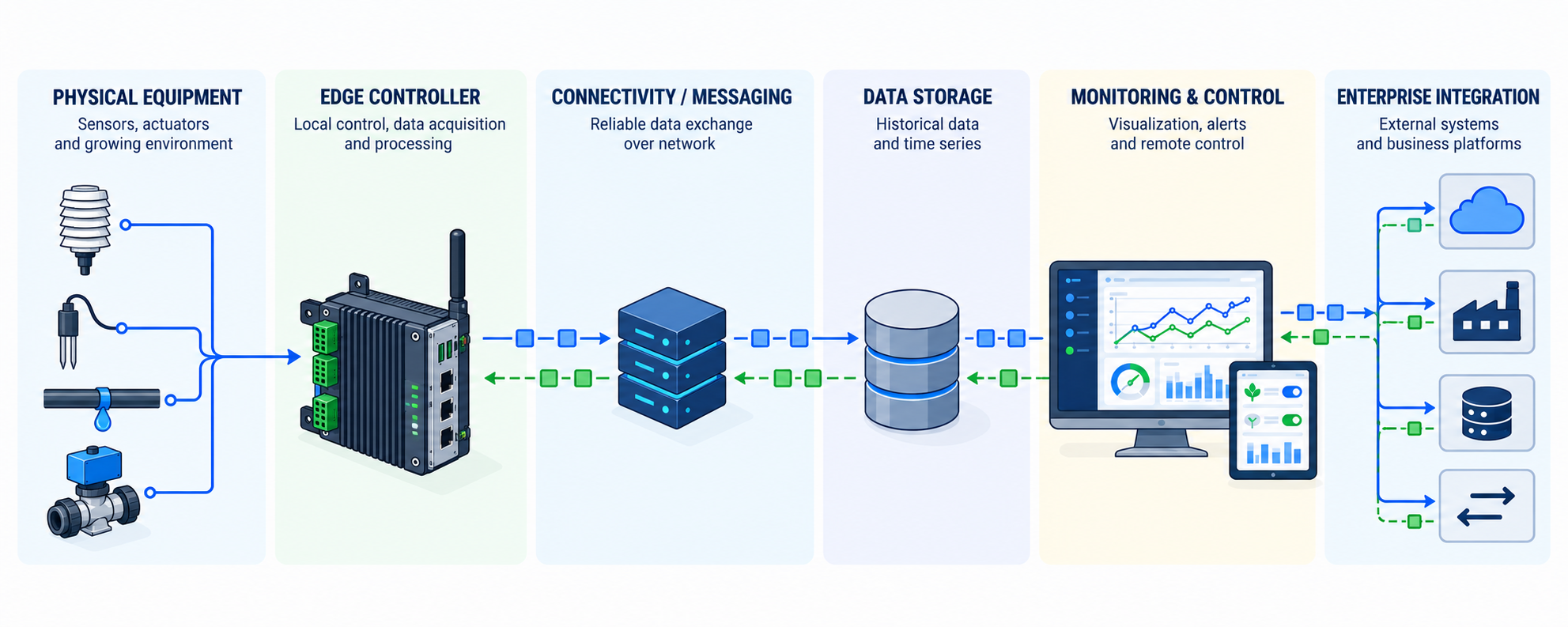
Telemetry moves from physical equipment through edge and messaging layers into historical storage, monitoring software and external enterprise or cloud systems. Commands and configuration can travel back toward the equipment.
View full-size image (opens in a new tab)SOFTWARE & OPERATOR LAYER
Saturn Axis can design and develop the software layer around connected greenhouse and CEA systems — from telemetry collection and historical storage to operator dashboards, alerts, configuration, remote control and integration with external platforms.
Depending on project scope, this can include web-based monitoring and control applications, backend services, device and data integration, APIs and operational data platforms. The same capabilities apply to irrigation, environmental systems, remote equipment and industrial automation.
The same engineering pattern can extend from individual controlled environments to multi-zone and multi-site automation architectures, depending on the equipment, reliability and operational requirements of the project.
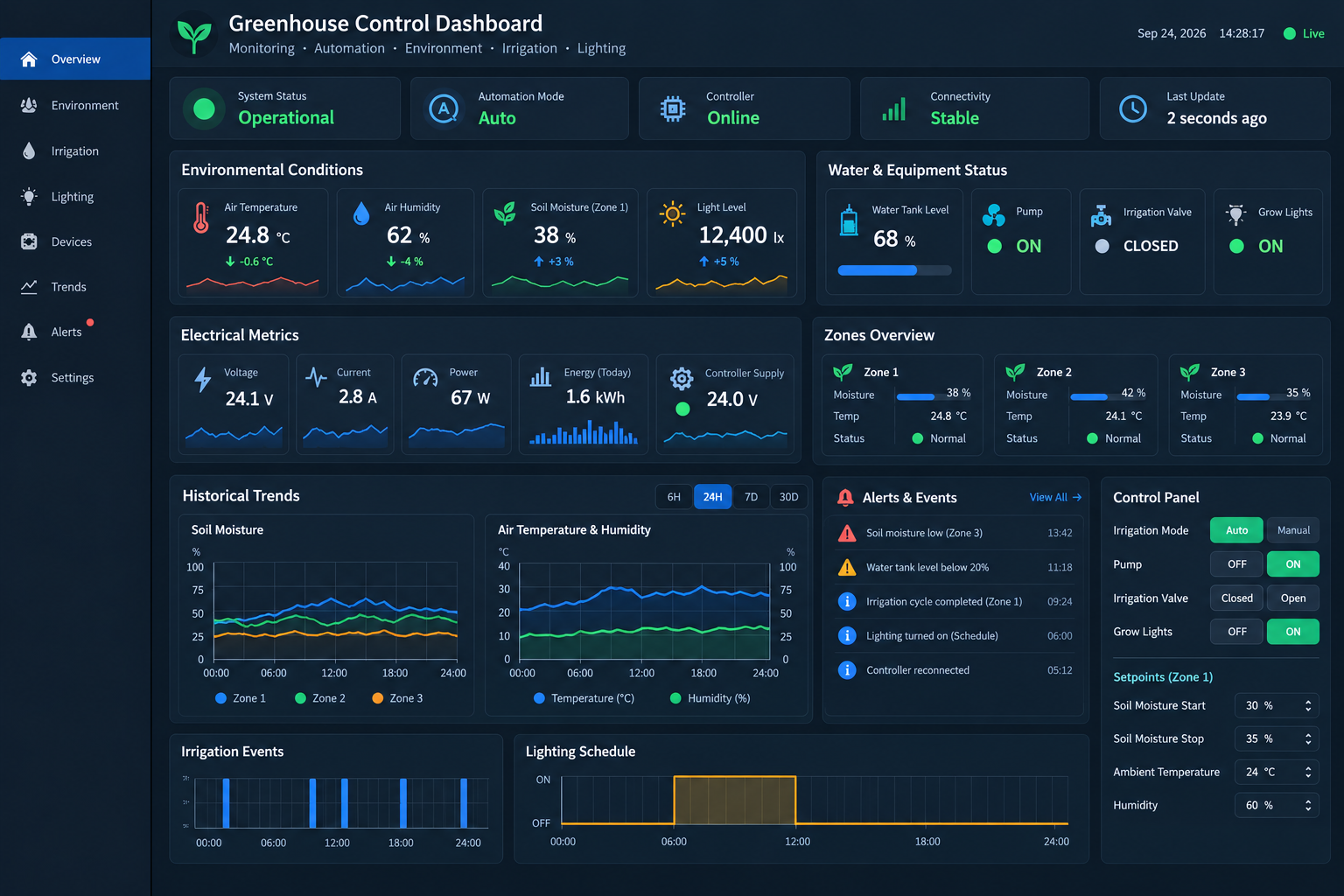
A web-based operator interface can combine real-time telemetry, historical trends, electrical metrics, equipment status, alerts, automation settings and remote control in one operational view.
View full-size image (opens in a new tab)HOW WE ENGAGE
For greenhouse automation companies and systems integrators, CEA technology providers, irrigation and fertigation companies, AgTech IoT teams, equipment and controller/sensor manufacturers, climate-control vendors and industrial automation companies.
We can integrate with existing greenhouse systems, irrigation equipment, controllers and PLC-based automation, taking responsibility for a defined IoT, edge, control or software workstream alongside your engineering team.
Depending on the project, we can support or own controller connectivity, embedded and edge logic, telemetry, MQTT/API integration, data storage, monitoring, automation software and enterprise/cloud integration. This can include troubleshooting, validation and modernization.
Additional engineering support for your delivery team: sensor and controller integration, embedded control, edge systems, telemetry, system analysis and software integration.
Responsibility for a clearly scoped workstream, with agreed interfaces and acceptance criteria. Examples include sensor/controller integration through MQTT to storage and monitoring, or an edge gateway and retrofit integration.
LET’S TALK ENGINEERING
Tell us about your devices, existing controllers, software interfaces and the engineering scope you need covered.